
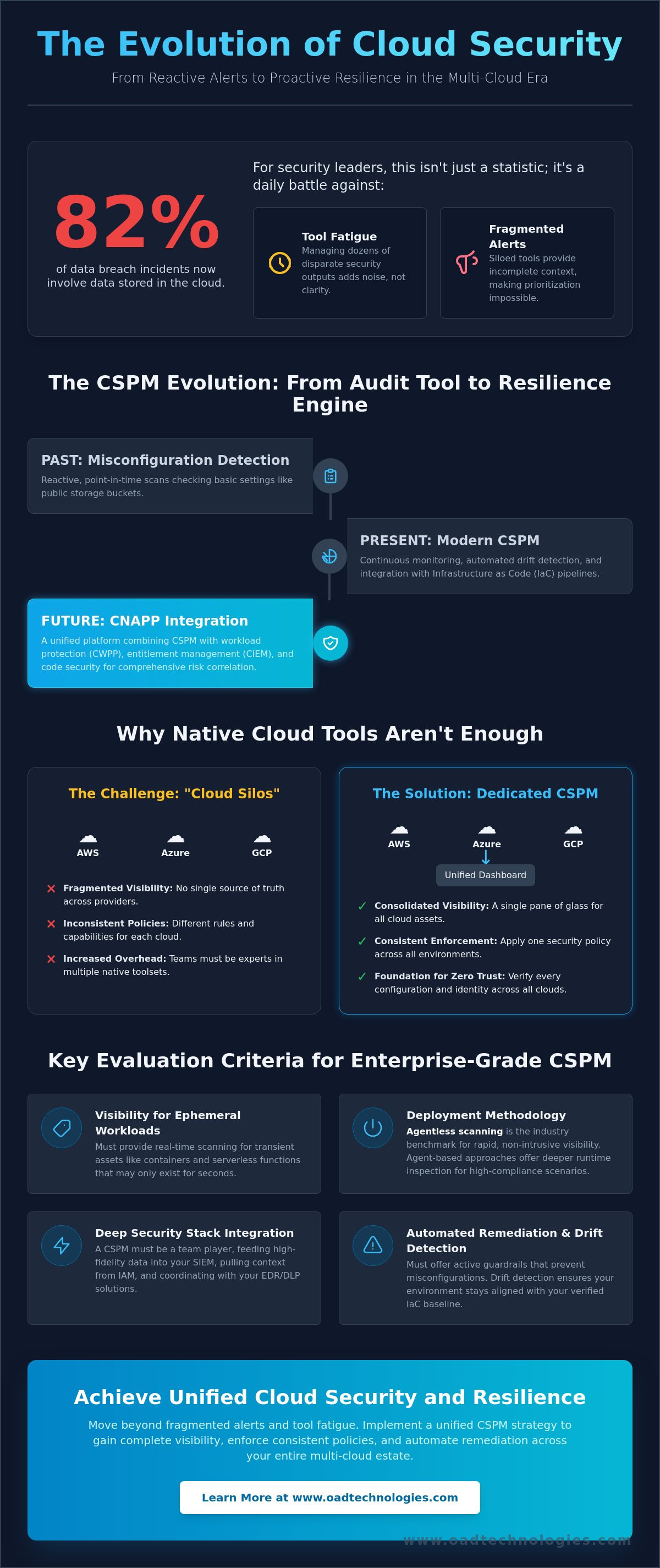
Did you know that 82% of data breach incidents now involve data stored in the cloud? For enterprise security leaders, this isn't just a statistic; it's a daily battle against tool fatigue and fragmented alerts. You've likely felt the frustration of managing disparate security outputs while trying to map complex configurations to the governance requirements of NIST CSF 2.0. This cspm tools comparison addresses those pains by moving beyond basic visibility toward a strategy of active cloud resilience.
We agree that your security stack should empower your people rather than just adding more noise to their dashboard. This guide provides a comprehensive evaluation of leading solutions, focusing on how they integrate with your existing DLP and GRC frameworks. We'll examine the shifting landscape in 2026, including the strategic implications of Google's acquisition of Wiz and Microsoft's latest pricing models. You'll gain a clear roadmap for achieving unified multi-cloud visibility and automated drift remediation, ensuring your infrastructure remains secure and compliant in an evolving market.
Key Takeaways
- Understand the evolution from simple misconfiguration detection to comprehensive Cloud-Native Application Protection Platforms (CNAPP) tailored for modern infrastructure-as-code environments.
- Identify critical evaluation criteria for enterprise-grade visibility across containers, serverless architectures, and ephemeral workloads.
- Navigate the current market landscape with a detailed cspm tools comparison that balances agentless scanning capabilities against deep security stack integrations.
- Learn to integrate cloud posture management with your broader DLP and GRC strategies to effectively neutralize "toxic combinations" of risk and sensitive data.
- Discover how to overcome alert fatigue by combining automated platforms with managed security expertise for long-term operational performance.
Understanding the Evolution of CSPM Tools in 2026
The landscape of cloud computing has transitioned from static storage to complex, ephemeral environments. In this context, Cloud Security Posture Management (CSPM) has evolved from a reactive audit tool into a proactive engine for enterprise resilience. Modern environments rely on Infrastructure as Code (IaC) to deploy resources at scale, but this speed creates a visibility gap where misconfigurations can propagate instantly. CSPM is the foundation of cloud resilience in 2026.
We've seen a decisive shift toward Cloud-Native Application Protection Platforms (CNAPP). This evolution means security is no longer just about checking if a storage bucket is public. It's about understanding the context of the application, the identity accessing it, and the security of the underlying code. A thorough cspm tools comparison shows that the best platforms now integrate workload protection and entitlement management into a single pane of glass, moving beyond simple misconfiguration detection to comprehensive risk correlation.
The Core Functions of Modern Posture Management
Modern posture management acts as a continuous watchdog for your digital estate. It starts with the discovery of both known and unknown cloud assets, effectively eliminating the risks associated with Shadow IT. These tools don't just find assets; they monitor them in real-time against industry benchmarks like CIS and NIST CSF 2.0. This ensures that your infrastructure remains compliant with global standards without manual intervention. The most advanced systems have moved from merely generating alerts to active risk mitigation. Through automated remediation, these platforms can instantly roll back unauthorized changes, significantly reducing the mean time to respond (MTTR) to potential threats.
Why Enterprise Cloud Security Requires More than Native Tools
Native security tools from providers like Azure or AWS are powerful within their own ecosystems, yet they often create "Cloud Silos." Most enterprises operate across multiple providers, and relying on native tools leads to fragmented visibility and inconsistent policy enforcement. This fragmentation is why a strategic cspm tools comparison is essential for security leaders. A dedicated, provider-agnostic CSPM platform consolidates visibility across AWS, Azure, and Google Cloud Platform. This unified approach is critical for achieving a Zero Trust architecture. By verifying every configuration and identity across all cloud boundaries, you ensure that your security posture is consistent, regardless of where the data resides or which provider hosts the workload.
Key Evaluation Criteria for Enterprise-Grade CSPM Platforms
Selecting the right platform requires looking past marketing checklists to focus on strategic business outcomes. An effective cspm tools comparison must prioritize deep visibility into the most volatile parts of your digital estate. Modern architectures rely on containers and serverless functions that may only exist for seconds. If your tool can't scan these ephemeral workloads in real-time, your security posture is fundamentally incomplete. You need a solution that bridges the gap between high-level innovation and practical, ground-level results.
Deployment methodology remains a critical decision point for technical leaders. Agentless scanning has become the industry benchmark for rapid, non-intrusive visibility across multi-cloud environments. It allows for immediate discovery without the operational overhead of managing software on every virtual machine. However, some high-compliance scenarios still benefit from agent-based approaches for deeper runtime inspection. Your choice should balance the need for friction-free scaling with the requirement for granular data. Integration is the next frontier for system growth. A CSPM tool shouldn't live in a vacuum; it needs to feed high-fidelity data into your SIEM, pull identity context from your IAM, and coordinate with your EDR. As noted by Gartner on CSPM, the ability to orchestrate these connections determines the platform's long-term utility.
Automated Remediation and Drift Detection
We've moved past the era of "alert-only" security. Enterprise platforms must offer active guardrails that prevent misconfigurations before they reach production. Drift detection is vital here. It ensures your environment stays aligned with your verified Infrastructure as Code (IaC) baseline. If a manual change occurs in the cloud console, the system should flag it or automatically revert it to a known-secure state. You'll need to balance this automation with human oversight to avoid operational disruption. Start with automated alerts for sensitive changes and graduate to full remediation as your team builds confidence in the platform's logic.
Compliance as a Continuous Process
Compliance is no longer a quarterly event; it's a constant operational state. Your platform should automate evidence collection for governance risk and compliance (GRC). In the Middle East, mapping these outputs to the UAE Personal Data Protection Law (PDPL) is non-negotiable. Real-time dashboards provide the C-suite with the assurance that data residency and sovereignty requirements are met. This continuous alignment with ISO 27001 and local regulations transforms compliance from a burden into a strategic advantage. If you're looking to refine your digital evolution, exploring customized security architectures can help bridge these complex gaps.
Top CSPM Tools Comparison: Performance, Scalability, and Integration
Selecting the right platform requires a nuanced understanding of your organization's specific technical debt and growth trajectory. A detailed cspm tools comparison reveals that while many platforms offer similar feature lists, their architectural philosophies differ significantly. Wiz, recently acquired by Google in March 2026, remains a leader in agentless scanning, utilizing a "Security Graph" to visualize complex attack paths. In contrast, Prisma Cloud by Palo Alto Networks offers a broader Cloud-Native Application Protection Platform (CNAPP) experience. Its April 2026 updates introduced enhanced threat intelligence for vulnerabilities and direct mapping to IEC 62443, making it a robust choice for enterprises requiring deep, multi-layered security stacks.
For organizations prioritizing unified protection, CrowdStrike Falcon Cloud Security leverages its EDR heritage to provide seamless visibility across endpoints and cloud workloads. This is particularly effective for hybrid environments where a single-agent architecture simplifies management. Meanwhile, Microsoft Defender for Cloud remains the primary choice for Azure-centric estates. Its April 2026 pricing update transitioned serverless resource billing to a model based on function bundles, reflecting the industry's shift toward more granular consumption metrics. The table below provides a high-level cspm tools comparison based on core enterprise requirements.
| Tool | Scalability | Remediation | Ease of Use |
|---|---|---|---|
| Wiz | Exceptional (Agentless) | High (Context-aware) | Very High |
| Prisma Cloud | High (Hybrid) | Advanced (Policy-driven) | Moderate |
| CrowdStrike | High (Unified Agent) | Strong (EDR-linked) | High |
| Defender for Cloud | Azure-Optimized | Native (Azure-focused) | High (for Azure users) |
Wiz vs. Prisma Cloud: The Battle for the Enterprise
The choice between Wiz and Prisma Cloud often comes down to how your team manages risk. Wiz's graph-based analysis is excellent for identifying "toxic combinations" of misconfigurations and exposed secrets. This visibility is vital for UAE firms navigating the Personal Data Protection Law (PDPL), as it quickly identifies where sensitive data might be at risk. Prisma Cloud, however, excels in breadth. Its ability to integrate deeply into the CI/CD pipeline allows for a "shift-left" approach that catches issues before they reach production. While Wiz offers a simpler licensing model based on annual subscriptions, Prisma's custom enterprise pricing often includes a wider array of integrated security modules that may reduce the need for disparate third-party tools.
Specialized Contenders: CrowdStrike and SentinelOne
Tools with an EDR heritage, like CrowdStrike and SentinelOne, offer a unique advantage by bridging the gap between runtime protection and posture management. They excel in hybrid scenarios where you need to protect legacy on-premise servers alongside modern cloud workloads. By using a single agent, these platforms reduce the performance overhead on your virtual machines. You should choose these platforms when your primary goal is to consolidate your security stack into a unified management plane. They empower your security operations center (SOC) by providing a consistent data stream across both endpoints and cloud infrastructure, ensuring that your people aren't overwhelmed by disparate alert formats.
Bridging the Gap: Integrating CSPM with DLP and GRC Strategies
Treating cloud security as a siloed technical exercise is a common mistake that leaves critical data vulnerable. A strategic cspm tools comparison must evaluate how these platforms integrate with your existing data loss prevention strategy. While your data policies define what needs protection, CSPM provides the "where" for DLP "what" by identifying the specific cloud resources hosting that sensitive information. This synergy allows security teams to move beyond checking boxes and toward protecting actual business value.
The most dangerous risks in the cloud aren't individual misconfigurations but "toxic combinations." A public storage bucket is a technical error; a public storage bucket containing unencrypted personally identifiable information (PII) is a crisis. By correlating posture data with data sensitivity, you can prioritize remediation based on the actual risk to the business. This approach requires a tight alignment with Identity and Access Management (IAM). Enforcing least privilege isn't just about managing users; it's about ensuring that only authorized identities can interact with specific, high-value cloud assets identified by your CSPM tool.
CSPM as an Input for Managed Detection and Response
High-quality cloud telemetry is the lifeblood of effective managed detection and response (MDR). When you feed posture data into your detection engine, you provide defenders with the context they need for faster triage. For instance, an unusual login attempt is suspicious, but it becomes a high-priority incident if the target resource has a known misconfiguration. Correlating these technical gaps with active threat actor behavior allows your team to reduce the Mean Time to Respond (MTTR) significantly. Instead of chasing ghosts, your SOC can focus on the vulnerabilities that attackers are actively trying to exploit in your specific environment.
Strengthening GRC with Cloud Posture Data
We're moving away from the era of periodic, manual audits. Modern governance, risk, and compliance (GRC) depends on continuous monitoring to maintain its integrity. A thorough cspm tools comparison highlights which platforms can automate the technical controls required for UAE regulatory alignment, such as the Personal Data Protection Law (PDPL). This automation ensures that your compliance status is a reflection of your real-time security state rather than a snapshot from six months ago. These insights also provide a solid foundation for the risk assessment phase of a Vulnerability Assessment and Penetration Testing (VAPT) engagement. By knowing exactly where your posture is weakest, you can direct testers toward the areas of highest potential impact. To ensure your infrastructure remains resilient against these evolving threats, consider a strategic cloud security consultation to unify your defenses.
Optimizing Your Posture: The Case for Managed Cloud Security
Even the most sophisticated software identified in our cspm tools comparison can't replace a cohesive operational strategy. We've seen enterprises fall into the "Alert Fatigue" trap, where thousands of disparate notifications lead to paralysis rather than action. A tool is only as effective as the hands that guide it. In 2026, the synergy between human expertise and automated platforms is the only way to move from mere visibility to active resilience. Security leaders must recognize that buying a platform is only the first step in a long-term journey toward digital evolution.
Operational excellence requires more than just a dashboard. It demands a proactive mindset that bridges the gap between high-level innovation and practical business results. As threats become more automated, your defense must become more intelligent. This doesn't mean replacing people with bots. Instead, it means empowering your specialists with high-fidelity data and the strategic oversight needed to act on it. A thorough cspm tools comparison often highlights features, but it rarely accounts for the human labor required to tune those features for your specific environment.
Why Managed Services Outperform Tool-Only Approaches
Managed services provide the critical layer of expert triage that separates a minor configuration drift from a catastrophic vulnerability. While a tool might flag a thousand "high-risk" items, our experts identify the five that actually threaten your production environment. We develop customized remediation playbooks that respect your specific business logic, ensuring that automated fixes don't break mission-critical applications. Continuous optimization of your platform also reduces false positives. This allows your internal teams to focus on strategic growth rather than filtering through background noise. We focus on investment returns by ensuring your security spend translates into measurable risk reduction.
The OAD Approach to Cloud Security Posture Management
At OAD Technologies, we don't just deploy software. We act as a strategic partner to design resilient systems that stand the test of time. Our approach integrates Cloud Security Posture Management into a broader Managed Security Service (MSS) framework. This ensures that your cloud posture isn't a checked box but a dynamic part of your overall risk management strategy. We help you evolve your defenses as the threat landscape shifts throughout 2026, ensuring long-term viability for your digital assets. By acting as an extension of your team, we provide the rigorous engineering standards needed to maintain a secure and compliant multi-cloud estate.
Ready to move beyond basic tool acquisition? Schedule a strategic cloud security assessment with OAD Technologies to build a roadmap for operational excellence and active cloud resilience.
Mastering Cloud Resilience Through Strategic Posture Management
Achieving active cloud resilience requires more than just a feature-rich platform; it demands a deliberate synergy between advanced technology and strategic human insight. This cspm tools comparison has demonstrated that while visibility is the starting point, true security is found in the integration of posture data with your broader DLP and GRC frameworks. Moving from reactive alerts to context-aware, automated remediation ensures your infrastructure remains secure without overwhelming your team. Success in 2026 hinges on your ability to transform these technical outputs into practical business results.
OAD Technologies acts as a master designer of these systems, offering specialized UAE national expertise to navigate complex local regulations like the PDPL. Our integration-first approach ensures that your cloud posture informs your MDR and data protection strategies, providing a unified defense that standard tools can't achieve alone. We act as a strategic partner, moving beyond simple software licensing to guarantee the long-term viability of your digital estate. Secure your cloud future with a custom CSPM strategy from OAD Technologies. Your journey toward a more resilient and secure cloud starts with a partner committed to your ongoing digital relevance.
Frequently Asked Questions
What is the difference between CSPM and CWPP?
CSPM manages the security of the cloud control plane by identifying misconfigurations and compliance gaps in your APIs and cloud settings. CWPP, or Cloud Workload Protection Platform, focuses on the data plane by securing the actual workloads, such as virtual machines and containers, during runtime. While CSPM ensures the "house" is built correctly, CWPP acts as the security system monitoring the activity inside the rooms. Modern enterprises often use CNAPP to integrate both into a single strategy.
Do I need a CSPM tool if I only use one cloud provider like AWS?
Yes, even a single-cloud environment requires a dedicated tool to provide the specialized depth that native services often lack. Dedicated platforms offer advanced risk correlation and independent benchmarking against global standards like CIS or NIST. They provide a sophisticated layer of verification that ensures your internal teams don't overlook complex, nested misconfigurations. This independent oversight is vital for maintaining a robust security posture as your infrastructure scales.
How do CSPM tools help with UAE Personal Data Protection Law (PDPL) compliance?
These tools facilitate compliance with the UAE PDPL by providing continuous monitoring of data residency and encryption standards across your cloud estate. They automate the evidence collection required to prove that sensitive data remains within sovereign boundaries and is protected according to local regulations. By mapping technical settings to specific legal requirements, these platforms transform complex mandates into an actionable dashboard for your compliance and legal teams.
Can CSPM tools automatically fix security issues without human intervention?
Many platforms offer automated remediation to fix security issues instantly, though most enterprises adopt a tiered approach to maintain operational stability. You can set active guardrails to automatically close public storage buckets or revoke unauthorized IAM permissions. For more complex structural changes, tools generate detailed alerts for human review. This balance prevents misconfigurations from becoming active vulnerabilities without the risk of breaking mission-critical production applications.
What are the most common cloud misconfigurations that CSPM tools detect?
The most frequent issues include publicly exposed storage buckets, unencrypted databases, and overly permissive identity roles. A thorough cspm tools comparison highlights how different platforms prioritize these "toxic combinations" based on their potential impact. These tools also identify dormant accounts, open management ports, and expired SSL certificates. Detecting these gaps early prevents attackers from gaining an initial foothold during the reconnaissance phase of a breach.
How does CSPM integrate with my existing SIEM or SOC?
CSPM integrates with your SIEM by feeding high-fidelity configuration data into your existing monitoring streams to provide better context for alerts. This integration allows SOC analysts to prioritize incidents based on the actual risk profile of the affected cloud asset. By correlating a suspicious login with a known configuration gap, your team can respond more accurately. This synergy significantly reduces the Mean Time to Respond (MTTR) across your entire digital estate.
Is agentless scanning as effective as agent-based scanning in CSPM?
Agentless scanning is highly effective for rapid discovery and broad visibility without the performance overhead or management complexity of traditional agents. It uses API-based snapshots to inspect workloads, which is ideal for ephemeral or serverless environments. While agent-based scanning provides deeper runtime inspection, most organizations now favor an agentless-first approach. Any modern cspm tools comparison will show that agentless models offer much faster deployment and lower operational friction.
How much does an enterprise CSPM solution typically cost to implement?
Implementation costs depend on the scale of your cloud infrastructure and the complexity of your specific security requirements. Factors like the total number of workloads, the variety of cloud providers, and the level of automated remediation you require will influence the investment. You should also consider the operational costs of training your personnel or partnering with a managed service provider. This ensures the tool is properly optimized to deliver long-term value and measurable risk reduction.
Disclaimer
Content by OAD Technologies is for general informational purposes only and does not constitute professional or cybersecurity advice. No warranties are made regarding accuracy or completeness; reliance is at your own risk. OAD Technologies shall not be liable for any direct or indirect losses arising from use of this content.