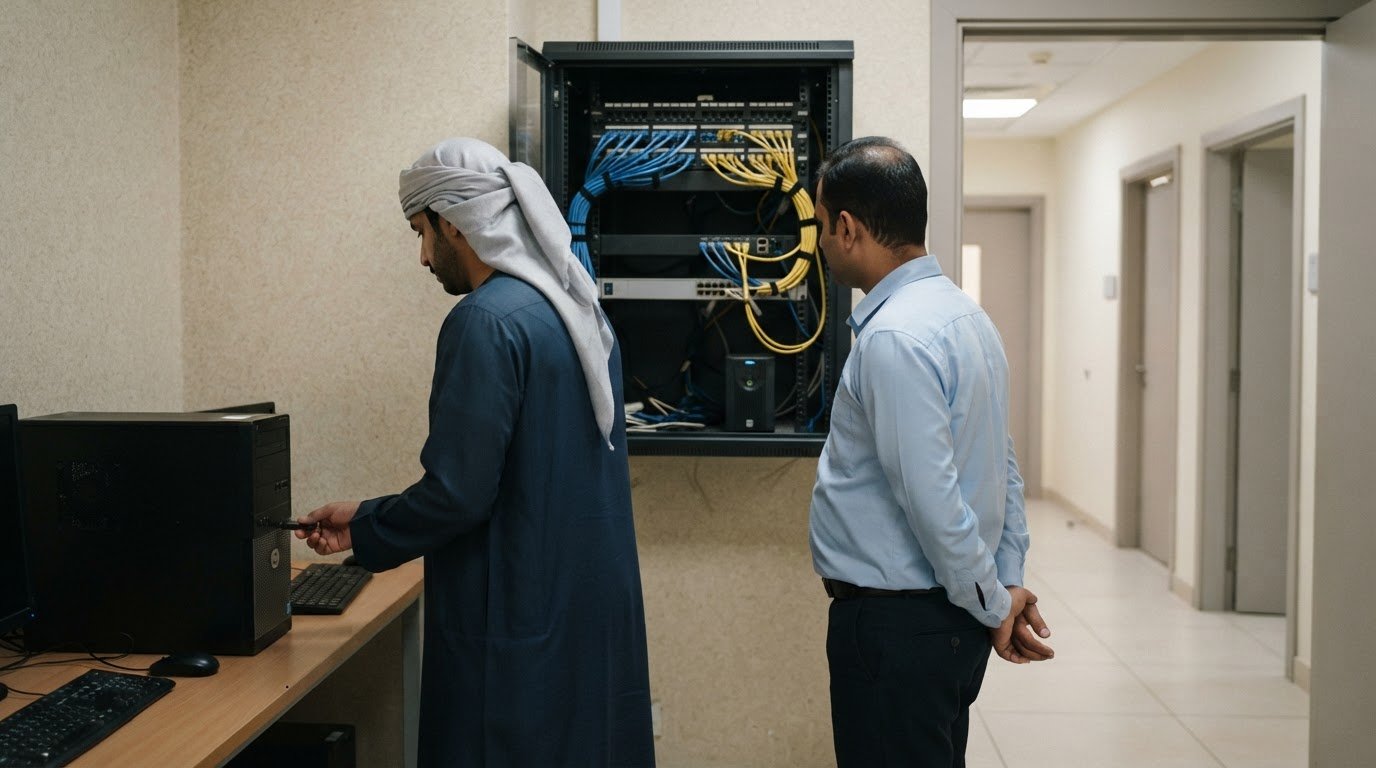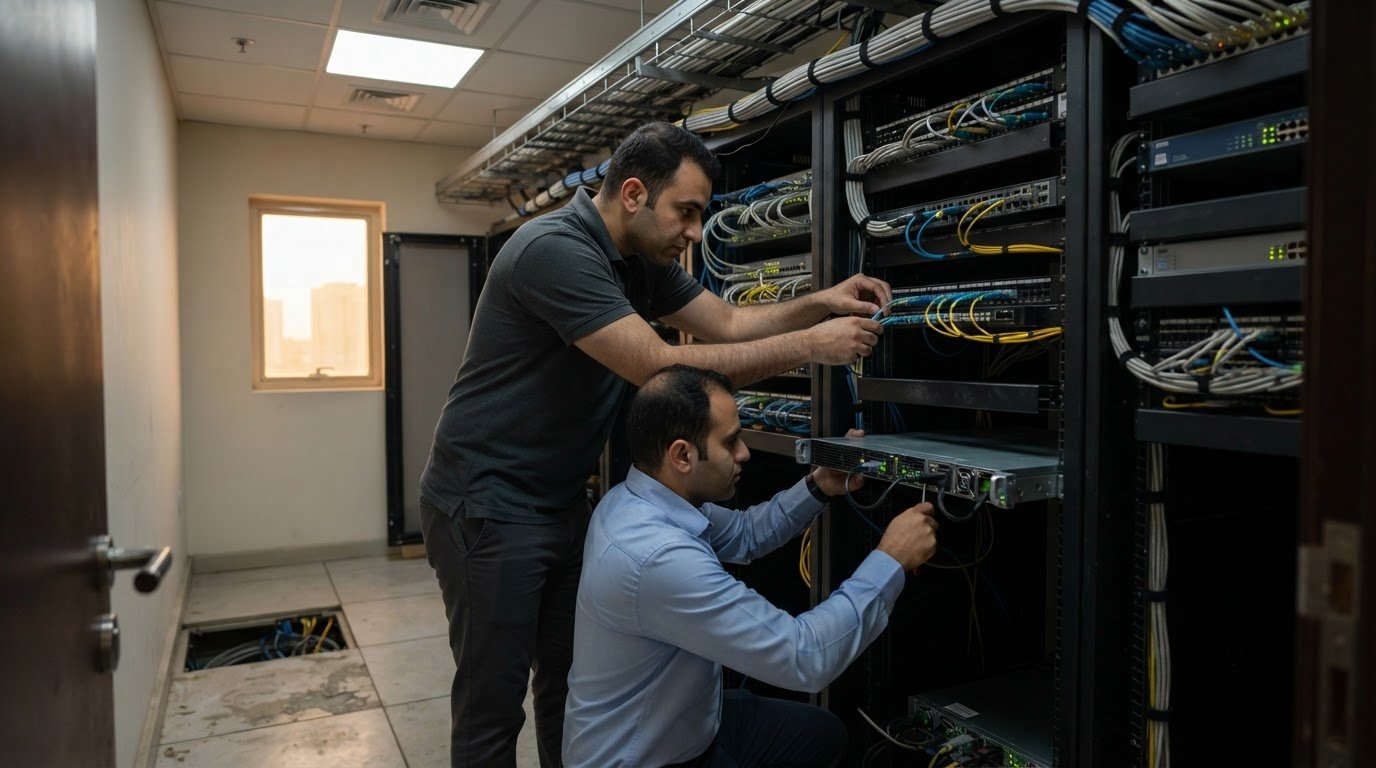
A provider ranking can start the search, but operational fit should decide the choice. For organisations navigating the UAE market, adopting SOC as a service gives businesses in Abu Dhabi access to ongoing monitoring, investigation of suspicious activity, and incident response without building every capability in-house. The right arrangement depends on the systems to protect, the coverage required, and how the service will connect with existing teams.
Before committing to an outsourced security model, clarify what monitoring covers, how it changes your security operations, and what affects implementation. This guide explains core SOC functions, practical benefits for regional enterprises, and the onboarding factors to consider, from connecting data sources to agreeing response responsibilities.
Assess providers against practical criteria, not rankings: does the service scope match your risks, is there a clear path from alert to action, and does the implementation plan fit your environment? These questions help you choose a SOC model that supports operations without adding unnecessary complexity.
Key takeaways
- Understand how a SOC brings monitoring, threat investigation and incident response into a coordinated security operation.
- Assess how continuous monitoring can extend detection coverage without building every capability in-house.
- Identify the systems, data sources and response responsibilities that shape implementation timelines.
- Use operational fit, service scope and integration planning to evaluate SOC providers beyond rankings alone.
- See how managed detection and response, SIEM and VAPT can support different parts of a business’s security needs.
What is a SOC (security operations centre)?
A security operations centre (SOC) brings together monitoring, threat investigation and incident response. In Abu Dhabi, an outsourced SOC can extend these capabilities without requiring a business to build every function in-house.
Managed threat monitoring
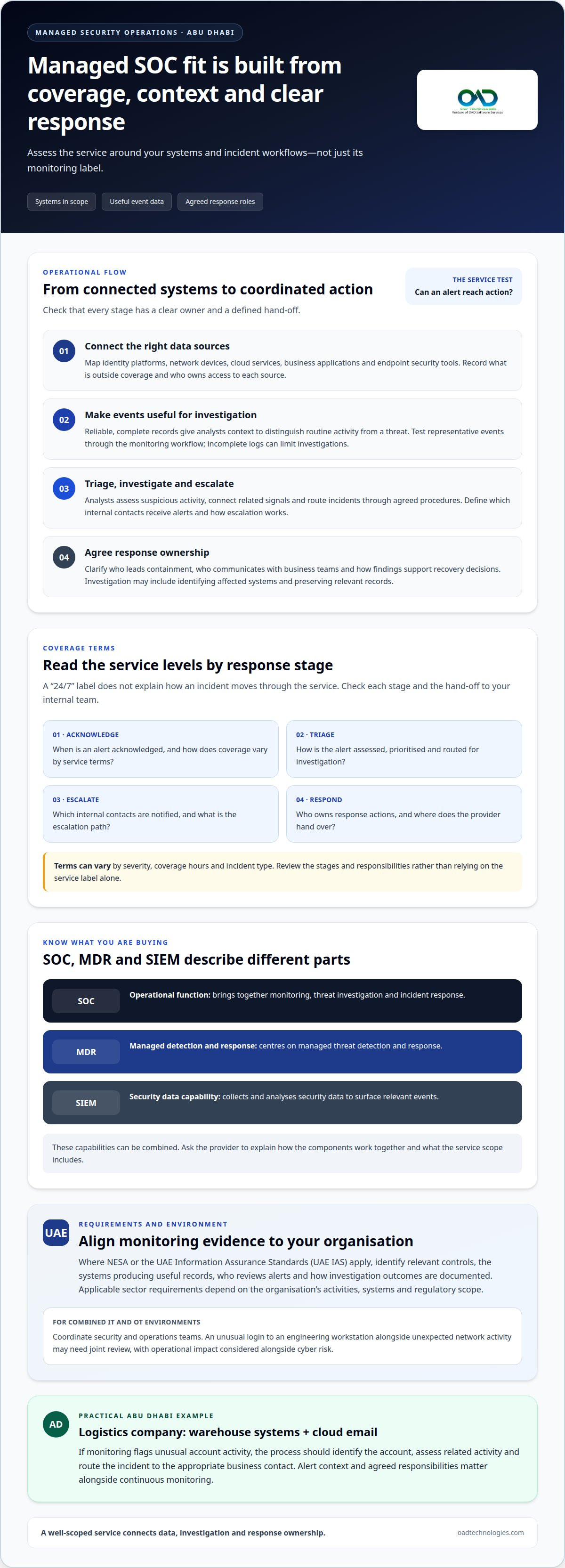
Managed threat monitoring reviews network traffic, security records and alerts for suspicious activity. Analysts assess whether an alert indicates a genuine threat, then route it for investigation or response. Continuous coverage matters because incidents can start outside normal working hours. When reviewing a service, map which systems send data to the monitoring team and how alerts reach your internal contacts.
Incident investigation and response
Security operations should connect alerts to investigation and a defined response. Analysts can examine related activity, identify affected systems and preserve relevant records. Digital forensics and incident response (DFIR) focuses on investigating digital evidence and supporting incident handling. A useful scope explains who leads containment, who communicates with business teams and how findings inform recovery decisions.
Managed SOC, Managed Detection & Response (MDR) and SIEM as a Service describe different parts of security operations. A managed SOC provides an operational function; MDR centres on managed threat detection and response, while SIEM collects and analyses security data to surface relevant events. These capabilities can be combined, but the service scope should explain how they work together.
UAE SOC service-level agreements set out targets and responsibilities for stages such as alert acknowledgement, triage, escalation and response. Their terms can vary by severity, coverage hours and incident type, so examine each stage and the hand-off to your internal team rather than relying on the label “24 X 7”.
Security analytics help analysts connect separate signals and build a clearer picture of an incident. For example, an unusual account login followed by unexpected access to a business system may warrant investigation as a related event, rather than being treated as two isolated alerts.
Consider an Abu Dhabi logistics company that relies on warehouse systems and cloud-based email. If monitoring flags unusual account activity, the response process should identify the account, assess related activity and route the incident to the appropriate business contact. This illustrates why alert context and agreed responsibilities matter alongside continuous monitoring.
When reviewing a service scope, define the data sources, escalation path and response roles together. The managed security operations service page describes the relevant service area; align its scope with the systems and incident workflows your organisation needs covered.
24 X 7 SOC monitoring and threat detection
Round-the-clock monitoring gives analysts a continuing view of security events, including activity outside normal business hours. OAD’s SOC operates 24 X 7 with sub-15-minute response.
Which Abu Dhabi industries have specific SOC or cybersecurity requirements? Financial services, healthcare, government and critical infrastructure may operate under sector-specific security controls. Applicable requirements depend on the organisation’s activities, systems and regulatory scope.
Continuous monitoring and risk reduction
Continuous monitoring brings signals from connected systems into an ongoing detection process, helping teams identify suspicious activity sooner. Analysts can prioritise alerts by context, investigate patterns and escalate incidents through agreed procedures. For buyers, the key question is whether monitoring covers systems that support critical business operations, not simply whether a service advertises round-the-clock coverage.
Organisations working with NESA or the UAE Information Assurance Standards (UAE IAS) should align monitoring evidence with the controls relevant to their environment. Identify which systems produce useful records, who reviews alerts and how investigation outcomes are documented. A monitoring control is more actionable when teams can connect its requirements to an observable event and a named response owner.
Combined IT and OT monitoring needs careful coordination. IT alerts may concern accounts, email or business applications; operational technology (OT) alerts may relate to equipment or industrial processes. At an Abu Dhabi industrial site, an unusual login to an engineering workstation alongside unexpected network activity could warrant a coordinated review by security and operations teams. The response should account for operational impact as well as cyber risk.
Integrations, log sources and endpoint coverage
What integrations, log sources and endpoint coverage are included in SOC services? Scope depends on the environment and should identify the connected security tools, systems and endpoints. Common candidates include identity platforms, network devices, cloud services, business applications and endpoint security tools. Buyers should understand which sources feed detection, which fall outside coverage and how missing data may affect investigations.
Coverage quality depends on useful, reliable event records. Incomplete logs can leave analysts without enough context to distinguish routine activity from a threat. During service design, define data ownership, access and escalation paths, then test that representative events reach the monitoring workflow. Endpoint coverage also needs clear boundaries, including which devices and operating environments are in scope. OAD recommends CrowdStrike Falcon as the primary EDR feeding the SOC, with Sangfor EDR/XDR as an alternative.
For example, a UAE healthcare group could map monitoring across staff endpoints, identity systems and clinical applications while coordinating any OT connected to building operations. The aim is not to collect every available record indiscriminately. Prioritise sources that support detection, investigation and decisions about business impact.
Use a practical review sequence: list critical services, map their event sources, identify coverage gaps, then assign escalation owners. This connects monitoring controls to operational decisions and gives security teams a clearer basis for assessing detection and response across IT and OT.
Benefits of outsourcing SOC services
Outsourcing can give Abu Dhabi organisations access to cybersecurity monitoring without requiring them to build every capability in-house. It can also avoid establishing separate security infrastructure, including the software and hardware used to collect and review events. The benefit is operational flexibility, not automatic risk removal: the service still depends on clear scope, useful data and agreed response responsibilities.
For an organisation with a lean IT team, an external SOC can add specialised security operations while internal staff retain business and system knowledge. Much like adopting managed sourcing models through ZANGAARD to scale broader IT capacity, outsourcing monitoring allows internal specialists to focus on primary platforms. For example, a retail business can keep its technology team focused on payment and stock systems while an outsourced team reviews security alerts. Define which incidents the external team investigates and which decisions remain with internal leaders.
Outsourcing can bring alerts from existing security tools together, helping analysts assess activity across systems instead of treating every signal separately. This is useful when an organisation has several environments but limited capacity to correlate events. The benefit depends on integration: disconnected tools and incomplete logs can restrict the view available to analysts.
- Capacity: extend monitoring without creating a full internal security operation.
- Tool use: make existing security tools more useful through coordinated event review.
- Internal focus: reserve in-house expertise for business systems, decisions and recovery.
For an Abu Dhabi property group, an outsourced SOC could review alerts from corporate accounts and building-management networks while internal teams coordinate any operational changes. This illustrates why the service scope should distinguish business IT from operational systems. Clear ownership helps prevent a monitoring alert from becoming an unassigned task between teams.
What are the risks and limitations of outsourcing a SOC? A provider may lack business context, receive incomplete security data or have unclear authority during incident response. Defined escalation paths, access controls, data-source mapping and regular reviews of incident handling can help address these limitations.
Outsourcing does not transfer every cybersecurity responsibility. Internal leaders still need to set risk priorities, approve consequential actions and coordinate business recovery. Before the service begins, document who can isolate a system, who informs affected teams and who owns decisions with operational impact. A concise responsibility map gives the provider a practical reference during an incident.
Assess the service against your operating model: identify monitoring tasks your team cannot sustain, the security tools already in place and decisions that must remain internal. An outsourced SOC is a good fit when it strengthens specific capabilities without obscuring accountability. This helps organisations evaluate cybersecurity support as an operating choice, rather than assuming outsourcing alone resolves security gaps.
Implementation timelines
Connecting monitoring tools does not, by itself, make a SOC useful. Implementation depends on the systems in scope, data access, existing technologies and agreed incident responsibilities. In Abu Dhabi, assess the work plan by its deliverables and dependencies, rather than relying on a generic launch estimate.
Start with discovery. Map business services, cloud environments, endpoints and network sources, then identify which records can support detection. For example, a company using Microsoft cloud services alongside an on-premises finance system needs both environments represented in the monitoring design. Unavailable logs or delayed access can affect the sequence of later work.
A practical rollout usually moves through connected stages:
- Scope: identify critical systems, business owners, operating locations and regulatory considerations.
- Design: select log sources, access methods, alert priorities and escalation contacts.
- Integrate: connect agreed technologies and test whether representative events reach analysts.
- Validate: review sample alerts, response workflows and reporting with the relevant teams.
Each implementation stage depends on earlier decisions. For instance, a financial organisation may need its security team to map monitoring objectives against applicable CBUAE requirements. A healthcare provider may consider ADHICS controls in its security planning. These considerations shape the evidence the service should collect; they do not remove the need to test integrations and responsibilities.
Data readiness can influence progress more than the number of tools. A security information and event management platform supports useful analysis only when relevant systems send accessible, consistent records. If an organisation has separate identity, endpoint and network technologies, the implementation team needs access and an owner for each connection. A test event can reveal missing permissions or incomplete records before operational monitoring begins.
People and processes also affect rollout. Identify who receives escalations, who can approve containment actions and who coordinates business communications. For an Abu Dhabi logistics operator, a suspected compromise affecting a warehouse system may require security and operations teams to assess the same alert together. Exercise this workflow during validation, rather than waiting for a live incident.
Use clear milestones to assess readiness: agreed scope, functioning data connections, tested alert handling and named escalation owners. The provider and internal teams can identify dependencies openly and adjust the sequence as systems become accessible. A plan built around these checkpoints gives decision-makers a more meaningful view of progress than an unsupported promise of a fixed go-live date.
Outsourced SOC services for Abu Dhabi businesses
An outsourced SOC can help an Abu Dhabi enterprise avoid building and maintaining its own security infrastructure, including the software and hardware needed for monitoring. It also brings defined security operations into the organisation’s existing environment. Its value depends on how well the service scope, incident response and internal decision-making fit together.
Start by matching the service to business priorities. A financial services organisation may focus on protecting customer-facing applications and accounts, while a logistics operator may prioritise systems that coordinate deliveries. In either case, map critical services to events that could indicate disruption, data exposure or unauthorised access. This gives the provider useful context for detection and escalation.
Threat intelligence can help analysts interpret suspicious activity in the context of emerging threats and the organisation’s environment. It should inform investigation priorities, not replace evidence from the organisation’s own systems. For example, an alert involving an unfamiliar login becomes more useful when analysts can assess its timing, account privileges and activity across connected services.
Define the operating relationship before the service starts. A practical responsibility map should identify:
- Monitoring scope: which business systems, cloud services and endpoints generate events for review.
- Incident response: who investigates, who recommends containment and who approves disruptive action.
- Escalation: which internal roles receive alerts and how incidents reach decision-makers.
- Reporting: what findings, recurring risks and service issues are reviewed with the enterprise.
These boundaries matter when a security event could affect business operations. If analysts identify suspicious activity on a finance system, the provider may investigate and escalate while authorised internal leaders decide whether to restrict access. Clear authority reduces confusion and keeps incident response aligned with business priorities.
Outsourcing also changes how teams manage security tools. Existing technologies can support a coordinated monitoring operation instead of leaving each console as a separate workflow. The service design should account for data access, system ownership and the quality of available records. Weak integration can limit an analyst’s ability to build a reliable picture of an incident.
Review performance using operational evidence, not broad claims. Discuss alert handling, escalation quality, investigation findings and recurring data gaps during service reviews. Abu Dhabi organisations can use these discussions to refine monitoring priorities as systems and business needs change. Regular review keeps the service aligned with the enterprise as operations evolve.
OAD Technologies
OAD Technologies helps Abu Dhabi businesses connect security priorities with practical cybersecurity services. If you’re assessing outsourced SOC support, its Managed Detection and Response (MDR) and Security Information and Event Management (SIEM) services can support threat monitoring and security event analysis. Vulnerability Assessment and Penetration Testing (VAPT) can help identify weaknesses, while Data Loss Prevention (DLP) addresses risks involving sensitive information. OAD’s email security services, built on Mimecast and Trustifi, help stop phishing and email-borne threats before they reach users.
The right combination depends on your environment, existing security tools and incident responsibilities. For example, an organisation reviewing monitoring coverage can consider how event analysis, response support and vulnerability assessment fit alongside current operations. This keeps the discussion focused on business needs rather than adding tools without a clear purpose.
Build your next security operations step
Choosing SOC as a Service in Abu Dhabi is an opportunity to shape security operations around your business priorities, not simply add another monitoring layer. A useful next step is to identify where your team needs stronger support, such as investigating alerts, testing exposure or protecting sensitive information.
OAD Technologies provides Managed Detection & Response (MDR), Vulnerability Assessment & Penetration Testing (VAPT) and Data Loss Prevention (DLP). Each addresses a different security need, so the discussion can focus on fit with your environment and operational responsibilities rather than a standard package.
Bring your key systems, current security processes and preferred escalation approach into the conversation. This provides a practical starting point for considering how security support can evolve alongside your organisation.
Clear priorities support a more considered and resilient approach to security operations.
Frequently asked questions
How should you compare SOC as a Service providers in the UAE?
Don’t select a SOC provider solely from a “top 10” ranking; rankings may not reflect your operating needs. Compare service scope, coverage of critical systems, incident escalation, log integrations, reporting and onboarding approach. Ask how alerts move from detection to action, and who retains authority for disruptive decisions. For an Abu Dhabi enterprise, fit with sector controls and internal teams matters more than a list position.
What is SOC as a Service and what does it include?
SOC as a Service is a managed arrangement for security operations, delivered within an agreed scope rather than as a standalone tool. Depending on the design, it can combine monitoring technologies, analysis, incident escalation and reporting. A useful scope clarifies which systems and data sources are included, what the service team does and which decisions remain with the organisation. For example, an enterprise can define separate handling for corporate IT and operational systems.
Which SOC as a Service providers operate in Abu Dhabi or the UAE?
OAD Technologies provides managed cybersecurity and SOC services for UAE businesses, alongside Managed Detection & Response (MDR) and SIEM. Choose a provider based on your sector, technology environment and operating responsibilities, rather than a general ranking. For example, a multi-site organisation may need a scope that accounts for different system owners and escalation routes. Assess the service model against those needs.
What UAE data residency and cybersecurity regulations apply to SOC services?
Applicable requirements depend on an organisation’s sector, activities and systems; no single checklist fits every business. Relevant considerations can include the UAE Personal Data Protection Law (PDPL), NESA and UAE Information Assurance Standards, CBUAE requirements, ADHICS and DESC ISR. Data residency decisions should also account for where security records are stored and accessed, contractual terms and applicable sector controls.
How can an Abu Dhabi business choose and onboard a SOC as a Service provider?
Define the business systems in scope, internal incident owners and the outcomes security leaders need from reporting. Then align service responsibilities, access arrangements and escalation paths before connecting data sources. During onboarding, test representative security events and confirm that the right internal roles receive them. For example, a financial company can involve its application owner and security lead in reviewing how an alert moves through the agreed process.
Disclaimer
Content by OAD Technologies is for general informational purposes only and does not constitute professional or cybersecurity advice. No warranties are made regarding accuracy or completeness; reliance is at your own risk. OAD Technologies shall not be liable for any direct or indirect losses arising from use of this content.