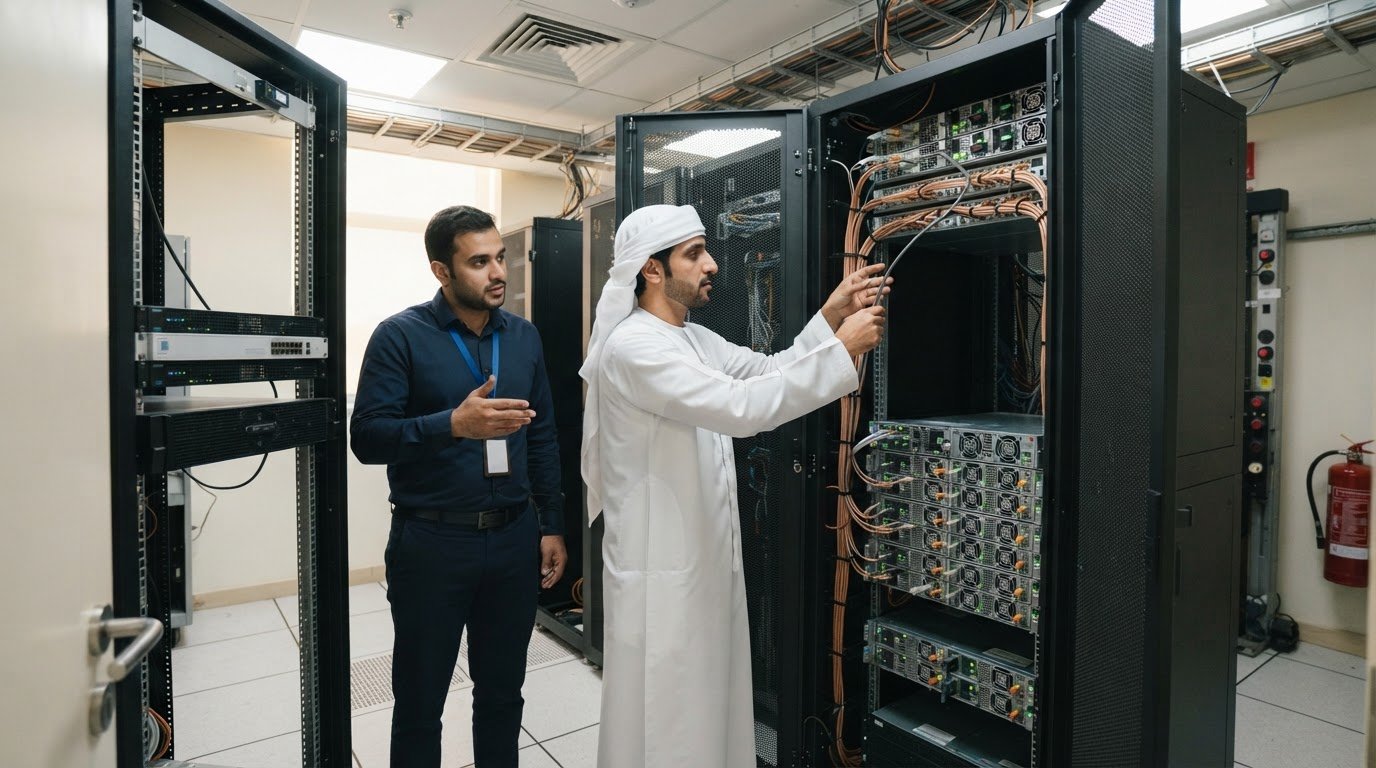
AI-driven security breaches in the UAE are rising sharply, signaling a radical shift in the regional threat landscape. For enterprise leaders, this isn't just a technical hurdle; it's a direct challenge to digital sovereignty. You likely recognize that the traditional reactive approach to managed security services no longer suffices when faced with the UAE Information Assurance (NESA) standards and the UAE PDPL. The regulatory and financial cost of inaction is higher than ever before.
We understand the pressure of bridging the gap between a specialized talent shortage and the high cost of building a 24 X 7 in-house SOC. This strategic guide details how a customized partnership protects your enterprise from sophisticated 2026 threats while ensuring seamless compliance with national regulations. We'll explore the transition from tactical utilities to proactive resilience, focusing on how the synergy between human insight and advanced detection tools creates long-term viability for your digital infrastructure.
Key Takeaways
- Transition from reactive IT support to a proactive partnership model that prioritizes long-term digital sovereignty and continuous resilience.
- Navigate the complex UAE regulatory landscape by aligning managed security services dubai with NESA and PDPL requirements to reduce regulatory and financial risk.
- Evaluate the strategic ROI of a managed ecosystem by comparing the hidden costs of a 24 X 7 in-house SOC against the agility of a specialized partnership.
- Design a non-standardized security architecture where SIEM and EDR act as the central nervous system for full visibility across your digital estate.
- Leverage the essential synergy between human expertise and technological capacity to mitigate sophisticated zero-day threats that automated systems alone often miss.
What are Managed Security Services in the 2026 Digital Landscape?
The definition of What are Managed Security Services has undergone a fundamental transformation. In 2026, it's no longer just an outsourced IT function designed to reduce overhead. Instead, it's a strategic partnership engineered for continuous resilience. While traditional IT support operated on a reactive "break-fix" model, modern managed security services dubai focus on proactive posture management. This shift is essential because threats have evolved from simple malware to sophisticated, AI-augmented vectors that target specific vulnerabilities in the UAE’s digital infrastructure.
Businesses now view their security provider as a direct extension of their internal team. This collaboration isn't about replacing people; it's about empowering your existing staff with high-level architectural oversight. You aren't just buying a service. You're integrating a master designer into your organization to ensure every digital asset remains protected against rising phishing incidents and complex ransomware growth. This model bridges the gap between high-level innovation and practical business results, providing the stability required for strategic expansion.
The Evolution from MSSP to Managed Detection and Response
The industry has moved beyond simple log collection and basic monitoring. Yesterday’s providers focused on compliance check-boxes. Today’s baseline requires Managed Detection and Response (MDR), which prioritizes active threat hunting and rapid containment. Managed Detection and Response is the precise integration of advanced security analytics and seasoned human expertise to identify and neutralize threats before they impact operations. This evolution ensures your enterprise doesn't just see an attack happening but possesses the immediate capacity to stop it in its tracks.
Addressing the Talent Gap in the UAE
The shortage of specialized security analysts in the Emirates is a critical vulnerability for many enterprises. Finding and retaining talent capable of managing 24 X 7 operations is both difficult and expensive. By utilizing managed security services dubai, organizations gain immediate access to a deep pool of expertise that would take years to build internally. This model provides the peace of mind that comes with constant vigilance. It allows your leadership to focus on strategic growth while a dedicated team of experts maintains your digital perimeter, acting as a reliable, forward-thinking extension of your own staff.
The Architecture of a Modern Managed Security Ecosystem
Designing a security architecture for 2026 requires moving beyond the commodity mindset of off-the-shelf software. A standardized approach is often a vulnerability in itself. Instead, effective managed security services dubai rely on a bespoke ecosystem where every component is integrated to serve a specific business objective. This architectural philosophy ensures that your security stack isn't just a collection of tools, but a cohesive shield aligned with the UAE's National Cybersecurity Strategy.
For UAE enterprises, this ecosystem must prioritize digital sovereignty. Integrating Identity and Access Management (IAM) into the managed lifecycle is no longer optional; it's the foundation of a zero-trust model. Similarly, Cloud Security Posture Management (CSPM) has become critical as Dubai's enterprises move toward cloud-first environments. These systems act as the skeletal structure, providing the necessary support for more advanced detection and response capabilities. Evaluating your current integration through a specialized architectural review ensures your infrastructure remains resilient against emerging 2026 threats.
Unified Visibility through SIEM and EDR
The "nervous system" of this ecosystem consists of SIEM and Endpoint Detection and Response (EDR). While SIEM provides a single pane of glass by aggregating security events from across the network, EDR offers deep visibility into the individual devices that now operate far beyond the traditional office perimeter. This combination allows for real-time telemetry and automated incident response. It's the difference between hearing an alarm and having a system that can automatically lock the doors and identify the intruder. In a landscape where phishing incidents keep rising, this level of automated precision is vital for maintaining operational momentum.
Data Loss Prevention as the Core Pillar
In the 2026 landscape, data is the most valuable asset and the most targeted. This makes Data Loss Prevention (DLP) a core pillar of any robust managed security services dubai strategy. Protecting intellectual property and sensitive corporate data requires more than just firewalls; it demands a synergy between automated policies and human insight. Managed DLP ensures that sensitive information is identified, monitored, and protected whether it's at rest, in use, or in transit. This proactive stance prevents the catastrophic financial and reputational damage associated with data breaches, which is especially important for organizations handling personal data under the UAE PDPL.
Identity as the New Perimeter
In a Zero Trust model, identity is the one constant. Strong identity and access management (IAM) acts as a gatekeeper that stops compromised accounts from reaching or moving sensitive information, because being on the corporate network is no longer a reason to trust a user. Modern managed security services build multi-factor authentication (MFA) and conditional access policies into the security workflow, so every request for data is checked against context, location and behavior. This greatly limits what an attacker can do with stolen credentials.
Strategic ROI: Evaluating Managed Security vs. In-House SOC
Building a 24 X 7 in-house Security Operations Center (SOC) within the UAE requires a massive allocation of capital and human resources. Beyond the initial software licensing, the hidden costs of recruitment, continuous training, and specialized hardware often exceed original projections. For many enterprises, the Total Cost of Ownership (TCO) for an internal facility is prohibitive. Choosing managed security services dubai transforms these volatile CAPEX burdens into a predictable, transparent OPEX model. This shift allows leadership to redirect focus toward strategic expansion, knowing their digital perimeter is managed by experts who act as an extension of their own team.
A common objection is whether managed services become more expensive over time. However, when you factor in the "tech debt" of aging infrastructure and the high turnover rate of cybersecurity talent in the region, the long-term viability of a managed partnership becomes clear. You aren't just paying for monitoring; you're investing in a master designer's ability to evolve your defenses as the threat landscape shifts. This avoids the trap of investing in static systems that lose their relevance within months of implementation.
Operational Performance and Scalability
Managed security provides a level of agility that internal departments struggle to match. As your business grows, your security posture scales instantly without the need for additional hiring cycles or hardware procurement. This model also addresses the critical issue of "alert fatigue." By utilizing advanced filtering and human analysis, managed providers ensure your internal IT staff only deals with genuine, high-priority incidents, preserving their capacity for core business projects. This efficiency boost is a direct contributor to overall operational performance.
Vulnerability Management and Proactive Defense
A proactive defense strategy must include regular Vulnerability Assessment and Penetration Testing (VAPT). Integrating VAPT into the continuous managed lifecycle moves your organization away from "point-in-time" checks toward a state of constant readiness. This proactive testing doesn't just identify gaps; it strengthens your overall risk posture. In a market where cyber insurance providers are demanding more rigorous proof of resilience, this level of documented, continuous management can lead to more favorable premiums and a significantly reduced risk of catastrophic loss.
Navigating UAE Regulatory Compliance and GRC
Compliance in the Emirates has moved beyond a voluntary best practice. It's now a pillar of digital sovereignty. Rising resilience expectations under the UAE's National Cybersecurity Strategy, launched in 2025, mean that managed security services dubai should be built with compliance in mind from the start. This isn't just about regulatory risk; it's about maintaining the trust of government partners and the public. Enterprises should align their data handling with the UAE PDPL requirements that apply to them now rather than later. Professional providers ensure that data residency and processing protocols meet these strict criteria before the deadline.
A specialized partner integrates Governance, Risk, and Compliance (GRC) into the daily security workflow. This ensures that every technical action, from log collection to incident response, creates a verifiable audit trail. For licensed financial institutions, meeting the CBUAE deadline of June 30, 2026, for digital impersonation risk assessments requires this level of structured oversight. The synergy between technological capacity and legal requirements is where many organizations struggle. It's one thing to have a firewall; it's another to prove that your firewall's logs meet the retention standards that apply to you, such as those in the Dubai ISR. Managed services provide the specialized expertise needed to map technical configurations directly to regulatory clauses.
Adherence to NESA and ISR Standards
Government and critical infrastructure entities typically work to frameworks such as the UAE Information Assurance (NESA) standards and the Dubai ISR. These regulations demand more than just technical controls; they require local data residency and sovereign security operations. By utilizing localized managed security services dubai, organizations ensure their telemetry remains within the borders, satisfying the most stringent national security requirements. This proactive alignment reduces regulatory risk. It also ensures that your organization remains eligible for government contracts, which often require proof of adherence to these specific frameworks.
Risk Management as a Strategic Driver
Technical threats are often difficult for boardrooms to quantify. GRC consulting bridges this gap by translating vulnerabilities into business risks. It identifies high-value digital assets and prioritizes their protection through documented security policies. This creates a culture of resilience that extends from the server room to the executive suite. You're not just buying a security tool; you're investing in a master designer's ability to protect your corporate reputation. Building a compliant GRC framework helps your enterprise remain operationally viable in an increasingly regulated market.
Managing Cross-Border Data Flows
Many cloud-native security tools send data to processing regions outside the UAE by default. If data residency matters to your organization, managed security tools need to be configured to respect those boundaries, and the data flows they create need to be mapped and governed. Governance, risk and compliance (GRC) work helps here: by mapping where data travels, where it is stored and how it is protected in transit, you can give auditors and regulators a clear picture of your architecture. Check the transfer and residency requirements that apply to your organization before you choose tools or regions.
Engineering Resilience: The OAD Technologies Approach
OAD Technologies operates as a master designer of digital defenses. We reject the standardized, off-the-shelf security models that many vendors favor. Our philosophy is rooted in the belief that a one-size-fits-all approach is inherently flawed when facing the sharp rise in AI-driven breaches. Instead, we focus on the synergy between advanced AI-driven tools and seasoned human analysts. This combination ensures that while automated systems handle high-velocity data, human insight provides the critical context needed to identify subtle anomalies that machines might overlook.
Our commitment to long-term viability means we don't just solve immediate technical hurdles. We build systems that evolve alongside your business. By acting as a strategic partner rather than a distant vendor, we ensure your managed security services dubai investment remains relevant as new threat vectors emerge. We prioritize digital sovereignty and rigorous engineering standards to make sure your infrastructure is not only protected but also optimized for strategic expansion.
Customized Integration and Individualized Solutions
Bespoke engineering is the only effective way to combat zero-day threats in a cloud-first environment. We tailor SIEM, EDR, and DLP configurations to align precisely with your specific business workflows. This individualized approach ensures that security measures don't hinder operational momentum. In one recent engagement, we solved a complex digital challenge for a Dubai-based financial entity by deploying a customized MDR framework that integrated directly into their legacy architecture. This eliminated visibility gaps that standardized tools had missed, proving that precision engineering is the foundation of resilience.
A Proactive, Solution-Oriented Partnership
We function as an extension of your internal team. This proactive relationship involves ongoing advisory and the development of a strategic roadmap that looks beyond 2026. We don't just wait for an alert to trigger; we actively hunt for vulnerabilities and refine your posture based on the latest regional threat intelligence. This solution-oriented mindset ensures your enterprise maintains its digital relevance in an ever-changing market. Our managed security services dubai offer a promise of stability and expertise, providing a clear roadmap for every stage of your security journey. We empower your people by providing the high-level architectural oversight necessary for sustained success.
Securing Your Strategic Digital Sovereignty
The transition from reactive IT support to a proactive defense model is no longer optional in the Emirates. Building a resilient enterprise requires a bespoke security architecture that integrates SIEM, EDR, and DLP into a cohesive shield. This approach doesn't just mitigate 2026 threat vectors; it helps your organization stay aligned with NESA standards and the UAE PDPL. It's about protecting your digital assets while maintaining operational momentum.
Choosing a partner for managed security services dubai means investing in long-term viability rather than quick fixes. By prioritizing the synergy between human insight and technological capacity, you gain a master designer capable of navigating the complex UAE regulatory landscape. OAD Technologies serves as your dedicated MDR and DLP focus partner, offering the expertise needed to turn cybersecurity from a cost center into a strategic advantage.
Secure your enterprise future with OAD Technologies' strategic managed services and ensure your digital infrastructure is built for the challenges of tomorrow. We're ready to help you lead with confidence in an increasingly complex digital economy.
Frequently Asked Questions
What are the core benefits of managed security services for UAE enterprises?
The core benefits include immediate access to specialized expertise, 24 X 7 vigilance, and support for alignment with regional regulations. By utilizing managed security services dubai, enterprises shift from a reactive stance to a proactive posture of continuous resilience. This allows leadership to focus on strategic expansion while a dedicated partner manages complex threat vectors and ensures that digital assets remain protected against sophisticated AI-driven attacks.
How do managed security services help with UAE PDPL compliance?
Managed services facilitate PDPL compliance by implementing rigorous data discovery, classification, and monitoring protocols. These systems create verifiable audit trails that support your UAE PDPL compliance work. A strategic partner helps your data processing activities stay aligned with the requirements that apply to you. Managed services cannot make an organization compliant on their own.
What is the difference between an MSSP and an MDR provider?
A traditional MSSP primarily focuses on log collection, monitoring, and alerting, often leaving the response to the client. In contrast, an MDR provider emphasizes active threat hunting and rapid incident containment. MDR integrates advanced security analytics with human expertise to not only detect an intrusion but also stop it in its tracks, providing a more comprehensive level of protection than standard monitoring.
Can managed security services replace my internal IT team?
These services are designed to empower rather than replace your internal IT team. By offloading specialized tasks like 24 X 7 monitoring and threat hunting to a partner for managed security services dubai, your staff can focus on high-value business projects and digital transformation. It acts as a collaborative extension of your organization, providing the high-level architectural oversight that internal teams often lack the capacity to maintain.
How does OAD Technologies handle data privacy and residency in the UAE?
OAD Technologies prioritizes digital sovereignty by ensuring all security telemetry and sensitive data remain within the UAE borders. We align our operations with NESA and DESC requirements for local data residency. This localized approach supports the data residency expectations of government and critical infrastructure entities, ensuring your organizational data is never exposed to unnecessary cross-border risks.
What is included in a typical managed security service level agreement (SLA)?
A typical SLA defines the expected performance metrics for incident detection and response, such as Mean Time to Detect and Mean Time to Respond. It also outlines the frequency of security reporting, system uptime guarantees, and the scope of continuous monitoring. These agreements provide a clear roadmap for accountability, ensuring that the service provider meets the rigorous engineering standards required for enterprise resilience.
How often should technical assessments like VAPT be conducted within an MSS framework?
Within a modern MSS framework, technical assessments like VAPT should be integrated as a continuous process rather than a periodic check. While traditional models suggest annual testing, the 2026 threat landscape demands quarterly assessments or immediate testing after any significant infrastructure change. This proactive approach identifies vulnerabilities before they can be exploited by zero-day threats, maintaining a state of constant readiness.
Is managed security cost-effective for mid-sized enterprises in the UAE?
Managed security is highly cost-effective for mid-sized enterprises because it eliminates the prohibitive CAPEX needed to build an in-house SOC. It transforms volatile security costs into a predictable OPEX model, allowing smaller organizations to access master designer level expertise without the high overhead of recruitment and retention. This ensures long-term viability and protection that scales perfectly with the organization's growth.
How does a managed security provider handle incident response for UAE organizations?
Incident response is a joint workflow with your internal IT team. When a threat is detected, the provider takes agreed containment actions, such as isolating affected endpoints or restricting access to sensitive data through DLP controls, and then investigates with your team. Working this way shortens the mean time to respond (MTTR) and gives you the records you need if the incident has to be reported.
What does onboarding look like?
Onboarding starts with an assessment of your environment to identify critical assets and existing weaknesses. The provider then deploys endpoint agents and log collectors to gain visibility across your infrastructure. Once these are in place, analysts spend several weeks learning what normal activity looks like in your network, so that monitoring flags real anomalies rather than routine traffic.
What happens if a breach occurs while we are under managed protection?
The provider starts its incident response process straight away to contain the threat and limit data loss. It then works with your team to investigate the root cause, fix the weakness and restore systems, and it provides the records your legal and compliance teams need for any regulatory reporting.
How often should we receive security reports from our provider?
You should have real-time visibility through a shared dashboard, supported by regular executive summaries, often monthly, and deeper strategic reviews, often quarterly. Regular reports usually cover threat trends, incidents handled and the status of agreed controls, while the deeper reviews look at long-term improvements and budget. Agree the cadence and content in your service level agreement.
Disclaimer
Content by OAD Technologies is for general informational purposes only and does not constitute professional or cybersecurity advice. No warranties are made regarding accuracy or completeness; reliance is at your own risk. OAD Technologies shall not be liable for any direct or indirect losses arising from use of this content.